Hassle-free 14-day standard returns • 30-day free replacement warranty if your 3D print is faulty!
Hassle-free 14-day standard returns • 30-day free replacement warranty if your 3D print is faulty!
What Are 3D Printed Fidgets? A Practical UK Guide for Buyers

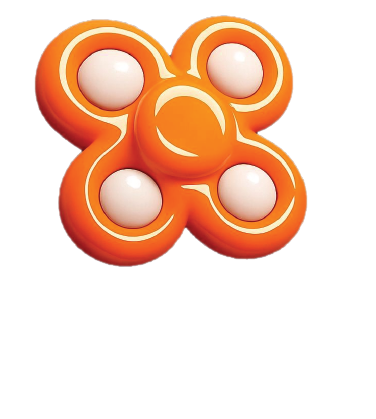
What are 3D printed fidgets? They are handheld sensory devices created layer-by-layer from digital designs using a 3D printer, featuring moving, textured, or interlocking parts. Designed to keep hands occupied and encourage focus, people use these tactile objects at home, school, work, or while travelling for repetitive, soothing movement.
Unlike conventional plastic toys made in large moulds, 3D printed fidget toys can be produced in smaller batches. This gives makers freedom to create unusual shapes, movement styles, and colour combinations. Aventine Printz Ltd uses this method to offer UK-made fidgets and sensory bundles for everyday settings.
How Are 3D Printed Fidgets Made?
Every fidget begins as a three-dimensional digital model. The file defines its size, texture, shape, and moving sections. Slicing software converts the design into thin horizontal layers and prepares instructions for the printer.
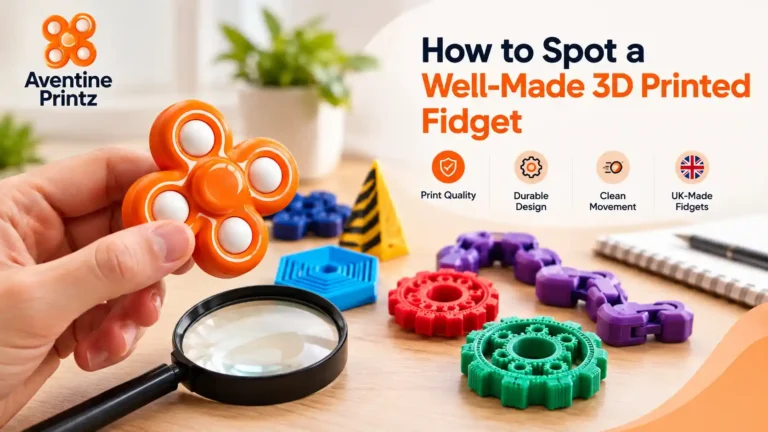
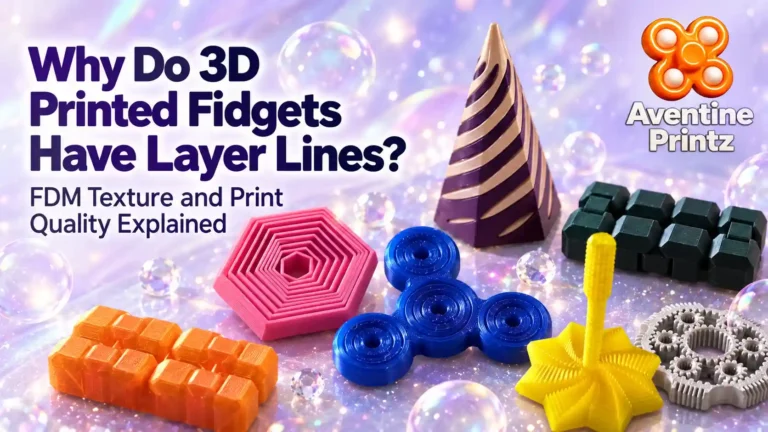
A filament printer heats material and places it along a programmed path. Each layer bonds to the previous one until the object is complete. Fine horizontal lines on pieces are a normal result of this process, not automatic evidence of poor quality.
Some designs are printed in place. Links, hinges, rings, or rotating sections are created together, with small gaps between moving parts. They can move after printing without screws or complicated assembly. Accurate settings matter: narrow gaps may fuse, while wide gaps can create looseness.
At Aventine Printz Ltd, the work does not end when the printer stops. A finished fidget should be checked for correct movement, visible defects, sharp areas, loose sections, and damage before packing. This matters because bright colours cannot prove that an item functions properly.
What Types of 3D Printed Fidget Toys Are Available?
There is no single standard design. The best option depends on the movement, resistance, texture, size, and sound the user prefers.
Articulated fidgets have linked sections that bend, wiggle, or fold. They provide continuous movement, although their parts may tap together and create noise.
Sliders allow one component to move repeatedly across or through another. Some move quietly, while magnetic or click-based versions can be noticeable.
Clickers, switches, and key-style fidgets provide a clear action and response. They may suit someone who enjoys distinct feedback, but they are not always appropriate for classrooms, meetings, or libraries.
Spinners include rings, gears, discs, and gyroscope-style designs. Pass-through fidgets use geometric shapes to create a repeating motion without resetting the object.
Textured 3D-printed sensory toys focus on ridges, bumps, grooves, or patterned surfaces. Mixed bundles are useful when someone has not identified the movement or texture they enjoy most.
What Are PLA Fidgets?
PLA means polylactic acid. It is a thermoplastic commonly used in filament 3D printing and can be made from plant-derived feedstocks. However, customers should not assume every PLA product is completely biodegradable or environmentally harmless. Pigments, additives, production, packaging, and local disposal facilities affect the wider picture.
PLA fidgets are popular because the material can produce lightweight objects, detailed shapes, firm moving parts, and finishes.
Its main limitation is heat resistance. PLA can soften or deform inside a hot vehicle or near a strong heat source. Keep PLA fidgets away from radiators, dishwashers, and prolonged high heat unless the maker gives different product-specific instructions.
Are Fidgets and Sensory Toys the Same Thing?
A fidget is usually designed for repeated hand movement, such as sliding, turning, clicking, folding, or twisting. A sensory toy may provide tactile, visual, auditory, or movement-based input. Some sensory toys are fidgets, but not every sensory product is intended for repetitive one-handed use.
Descriptions should explain what an item does. Labels such as “calming”, “focus” or “sensory” are less useful than details about movement, sound, texture, resistance and size.
Some people find that a small object gives their hands a controlled activity while they listen, work, study, or wait. Others find the same movement distracting. Fidgets should be presented as personal tactile products, not guaranteed treatments for ADHD, autism, anxiety, or any medical condition.
How to Choose the Right 3D Printed Fidget
Start with the setting. A clicker enjoyed at home may disturb people in a quiet office or classroom. For shared spaces, look for compact designs with low-noise movement.
Next, consider the preferred action. Does the user like sliding, spinning, flexing, twisting, clicking, or surface texture? Do not choose solely by colour or a condition-based product name.
Check dimensions and bundle contents. Photographs can make small objects appear larger. A clear listing should state measurements, quantity, material, and any detachable or additional components.
Review the sound level. “Small” does not mean “silent”. Articulated pieces can tap together, and some fidgets are intentionally clicky.
Read the age guidance and safety information. Products with small or breakable parts may be unsuitable for young children. Inspect frequently used fidgets for cracks, sharp damage or loose sections, and stop using them if their condition changes.
Finally, choose a transparent seller. Look for clear photographs, accurate descriptions, contact details, delivery information, care instructions and a returns policy. Claims such as “premium quality” mean little without evidence.
What Should UK Buyers Know About Toy Safety?
In Great Britain, products designed or intended for play by children under 14 can fall within the Toy Safety Regulations 2011. Manufacturers must consider applicable safety requirements before placing toys on the market and provide appropriate warnings, instructions, and traceability information.
That does not mean every desk object is automatically a children’s toy, or that PLA alone proves safety. Classification depends on intended use, presentation and design. Buyers should follow the age guidance on the specific listing rather than making assumptions from colour or appearance.
Parents and carers should consider choking risks, sharp points, moving links, and wear. No article can replace product-specific instructions or responsible supervision where required.
Are UK-Made Fidgets Better?
A fidget is not automatically better because it was printed in the UK. Quality still depends on design, material selection, printer calibration, finishing, inspection, and honest information.
However, buying from a transparent UK maker has practical advantages. Communication can be easier, delivery routes may be shorter for UK customers, and buyers can ask questions about materials, dimensions, or bundle contents. A small UK business may also provide clearer accountability than an anonymous marketplace seller.
Why Choose Aventine Printz Ltd?
Aventine Printz Ltd is a family-run UK business creating 3D-printed fidgets and curated sensory bundles in London. Its range covers desk use, home, school, gifting, and everyday tactile movement.
The business is shaped by the lived experience of neurodivergence, but it does not need exaggerated medical promises. The credible approach is to help customers compare movement, texture, sound, size, and setting so they can choose thoughtfully.
Customers can explore individual designs or bundles containing different tactile experiences. This suits gift buyers and people who are unsure whether they prefer sliding, articulated movement, textured surfaces, or other repetitive actions.
Aventine Printz Ltd gives UK customers direct access to the business. Before ordering, shoppers can review product details, read the company story, check shipping information, and contact the team with practical questions.
Clear information should remain central. Each listing should accurately state what is included, the material, relevant dimensions, and any care or age guidance. That transparency reduces uncertainty before checkout.
How Should PLA Fidgets Be Cared For?
Keep them away from high heat and do not leave them inside a hot car. Follow the maker’s cleaning instructions rather than using a dishwasher. Wipe them carefully with the method recommended for that product.
Check moving areas regularly. Stop using a fidget if a link breaks, a sharp edge develops, or a small part becomes loose. Store smaller pieces securely when not in use.