Hassle-free 14-day standard returns • 30-day free replacement warranty if your 3D print is faulty!
Hassle-free 14-day standard returns • 30-day free replacement warranty if your 3D print is faulty!
How to Spot a Well-Made 3D Printed Fidget?

3D printed fidget quality depends on clean print quality, smooth movement, secure joints, durable design, suitable materials, and quality control. Before buying, inspect the print finish, moving parts, product specifications, and maker information to check whether the fidget is properly made for its intended use.
A well-made 3D printed fidget should have clean print quality, smooth movement, secure moving parts, durable construction, and clearly stated product information. The best way to judge quality is to look beyond appearance and check how the fidget is printed, assembled, moves, and is prepared for use.
Whether you are searching for 3D printed fidgets in London, UK-made fidgets, or a reliable fidget online, these checks can help you make a more informed choice.
What Makes a 3D Printed Fidget High Quality?
3D printed fidget quality comes from more than a smooth-looking surface. A good fidget should combine consistent printing, functional movement, appropriate tolerances, durable design, and proper quality control.
Because 3D printed products are produced layer by layer, small visual differences can occur. What matters is whether the finished product is clean, functional, and suitable for its intended use.
How Can You Tell if a 3D Printed Fidget Is Well Made?
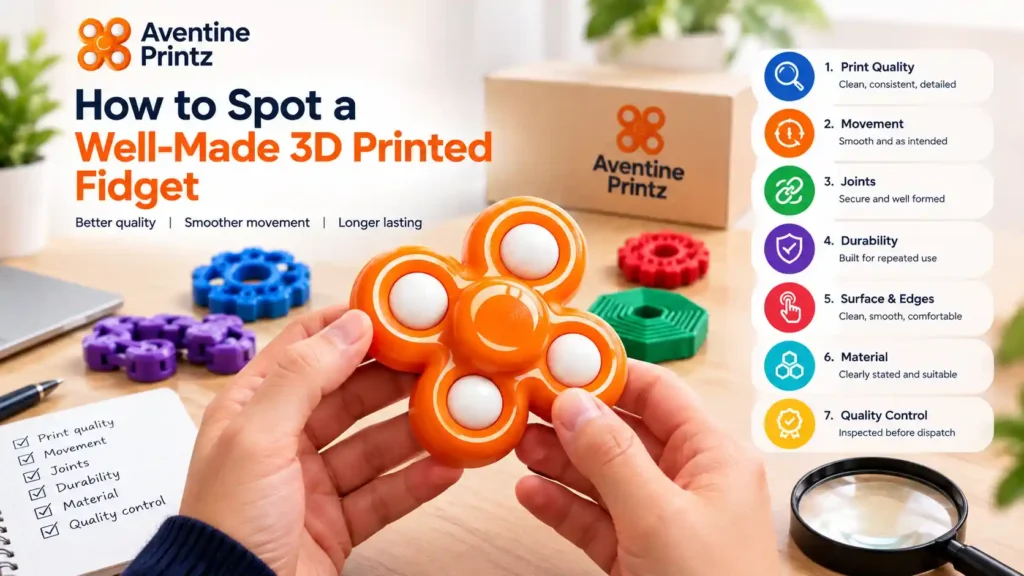
Check these seven areas before buying:
1. Look for Clean and Consistent 3D Print Quality
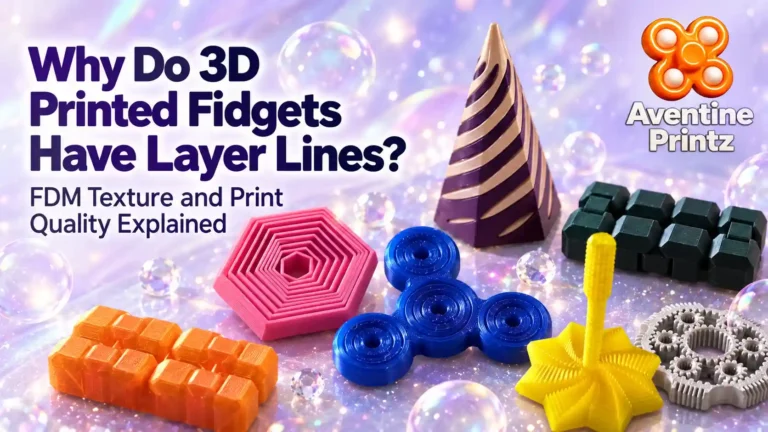
Inspect product photographs for consistent layers, clean surfaces, and well-defined shapes. Some visible layer lines are normal with 3D printing, but excessive stringing, blobs, gaps, warping, or poorly formed sections can indicate a weaker finish.
Good 3D print quality should support the function of the fidget, not just its appearance.
2. Check How Smoothly the Fidget Moves
Movement is one of the most important quality indicators for a fidget.
Depending on the design, a well-made product may spin, rotate, pass through, articulate or flow. Moving sections should perform their intended action without unnecessary stiffness, catching, or obstruction.
A fidget does not necessarily need completely silent movement. Sound can be part of the sensory experience. The important point is that the movement should work as described.
3. Examine the Joints and Moving Areas
Moving parts require enough clearance to function properly. If sections are fused together, excessively loose, or difficult to move, the fidget may not perform as intended.
Check photographs or videos carefully, especially around articulated joints, openings, handles, and connection points.
A useful product demonstration can often tell you more about movement quality than a static photograph.
4. Look for a Durable Design
A durable fidget should be designed for repeated normal use rather than simply looking attractive when new.
Look for sensible construction, secure connections and a design appropriate for the type of movement involved. Product information should also explain how the item should be handled and cared for.
Durability depends on the design, material, print settings and how the product is used, so avoid assuming that every 3D printed fidget has the same strength.
5. Check the Surface and Edges
Run your attention over the visible edges and surfaces shown in product photographs.
Clean edges and properly formed surfaces are good signs. Watch for excessive roughness, sharp defects, loose fragments, or visible printing problems that could interfere with handling.
A tactile product should be pleasant and practical to handle.
6. Check Whether the Material Is Clearly Stated
A trustworthy product listing should tell you what material has been used.
PLA is commonly used for 3D printed fidgets because it can produce detailed shapes and is suitable for many decorative and tactile designs. Other materials have different properties.
Do not judge quality from the material name alone. The print quality, design, and intended use also matter.
7. Look for Evidence of Quality Control
Quality control is an important difference between simply producing a 3D printed object and preparing a finished product for a customer.
Look for evidence that products are inspected for visible defects, movement, and overall condition before dispatch.
Clear specifications, accurate photographs, care information, and transparent manufacturing details can also help demonstrate that the seller takes product quality seriously.
What Should You Check Before Buying a 3D Printed Fidget?
Before purchasing, use this simple inspection process:
Inspect the photographs: Look for clean surfaces, edges, joints, and moving areas.
Read the specifications: Check dimensions, weight, material, grip, and intended setting, where provided.
Watch the movement: A product video can demonstrate how the fidget actually works.
Check the manufacturer: Look for clear information about who makes the product and where it is produced.
Read the care information: Good product information should explain sensible handling and maintenance.
This approach is particularly useful when comparing several 3D printed fidgets online.
What Are the Signs of Poor 3D Print Quality?
Common warning signs include excessive stringing, large blobs, warped sections, fused moving parts, rough defects, weak connections, and missing product information.
One small printing imperfection does not automatically mean a product is poor quality. Instead, consider whether the defect affects appearance, movement, comfort or durability.
Also be cautious when a listing provides very little information about the product, material, dimensions, or manufacturer.
Well-Made Fidget vs Cheap Fidget: What Should You Compare?
Price alone does not tell you whether a fidget is well made. Compare the actual product characteristics.
| Quality check | What to look for |
| Print quality | Consistent layers and clean details |
| Movement | Smooth, functional movement |
| Joints | Properly separated and secure |
| Durability | Sensible construction for repeated use |
| Surface | Clean and comfortable to handle |
| Material | Clearly identified |
| Specifications | Accurate and useful product details |
| Quality control | Evidence of inspection before dispatch |
A lower-priced product may be perfectly suitable, while a more expensive product may not automatically be better. The important question is whether the product delivers the quality and functionality described.
Are UK-Made Fidgets Better Quality?
Being UK-made does not automatically guarantee higher quality. However, knowing where a product is made can give buyers more information about the manufacturer and production process.
For customers searching for UK-made fidgets in London, Wembley, Harrow, Brent or elsewhere in the UK, check whether the seller clearly explains where products are produced and dispatched.
Aventine Printz is a UK-based online-only business with production in Wembley Park, London. Customers order online rather than visiting a retail storefront, with products available for delivery across the UK.
What Should a Well-Made Fidget Feel Like?
A well-made fidget should feel appropriate to its design. Moving parts should perform their intended action, surfaces should be reasonably clean, and the product should feel consistent with its description.
The right feel also depends on the type of fidget. A spinner, articulated design, and pass-through fidget can all provide different tactile experiences.
How Do You Keep a 3D Printed Fidget Moving Smoothly?
Keep your fidget clean and dry, avoid excessive heat, and handle moving sections according to the product instructions.
Inspect moving parts periodically for dirt, damage, or changes in movement. If a product becomes damaged, stop using it rather than forcing the mechanism.
Good care can help maintain the intended movement of a 3D printed fidget.
How Should You Choose a Well-Made 3D Printed Fidget?
Start with the type of movement you want, then compare size, grip, sound, material, durability, and intended setting.
For a desk, home, or sensory environment, consider whether the fidget’s movement and sound level suit the space. For gifting, look for clear specifications and reliable product information.
If you are unsure, choose a seller that provides detailed product descriptions, photographs, specifications, care guidance, and evidence of quality checking.
Why Choose Aventine Printz Ltd?
Aventine Printz Ltd produces 3D printed fidgets and sensory products in the UK, with production based in Wembley Park, London. The business operates online and serves customers across the UK.
Products are produced in small batches and manually checked before packing. Product listings provide practical information such as movement, size, weight, material, grip and sound where relevant.
The range includes individual fidgets, large fidget designs, adult fidget bundles and sensory collections. Aventine Printz also accepts custom requests for different colours, sizes, quantities and designs, with each request reviewed for feasibility, production requirements and price before payment.
For buyers comparing 3D printed fidget quality, these details make it easier to understand what they are buying and who is producing it.
Frequently Asked Questions
What is 3D printed fidget quality?
3D printed fidget quality refers to how well a fidget is printed, assembled, and designed for its intended use. Important factors include clean print quality, functional movement, secure joints, durable construction, suitable materials, and quality control. A good product should perform as described and provide clear information before purchase.
How can I tell if a 3D printed fidget is well made?
Check the print finish, edges, joints, and moving parts. Look for smooth functional movement, clearly stated materials, accurate specifications, and evidence of quality checking. Product videos can also help you assess movement before buying. Remember that some visible layer lines are normal in 3D printing.
Are visible layer lines a sign of poor 3D print quality?
Not necessarily. Layer lines are a normal characteristic of many 3D printed products because objects are built layer by layer. The important question is whether the layers are consistent and whether the finish affects movement, comfort, appearance or durability. Excessive defects are more concerning than normal layer visibility.
What makes a 3D printed fidget durable?
Durability depends on the design, material, print settings, construction, and intended use. Secure connections, appropriate tolerances, and properly formed moving sections can support repeated normal use. Buyers should also follow care instructions and avoid excessive force, heat, or use of a damaged product.
What is the best 3D printed fidget to buy?
The right 3D printed fidget depends on the movement, size, grip, sound, and sensory experience you prefer. A spinner may suit someone who enjoys rotation, while an articulated or pass-through design provides a different tactile experience. Compare specifications and movement rather than choosing based on appearance alone.
How much does a good 3D printed fidget cost in the UK?
Prices vary according to size, design, material, production time, and whether you are buying an individual fidget or a bundle. A higher price does not automatically mean higher quality. Compare print finish, movement, construction, specifications, and manufacturing information alongside price.
Are UK-made fidgets better quality?
UK-made does not automatically mean better quality. However, transparent UK production can make it easier for buyers to identify the manufacturer and understand where a product is made. Look for evidence of quality control, clear specifications, product information, and a genuine manufacturing location rather than relying on country of origin alone.
Final Thoughts
Good 3D printed fidget quality is about more than appearance. Look at the print finish, movement, joints, durability, material information, and quality control before buying.
If you are looking for UK-made 3D printed fidgets, Aventine Printz provides individual fidgets and sensory bundles through its online shop, with production in Wembley Park and delivery across the UK.
Explore the range, compare the specifications, and choose a fidget that matches the movement and sensory experience you want.